The Warm Direction

Essays written slowly, about things that move slowly.

Long-form work on ambient dissociation, allostatic load, and the conditions that decide how much of a person is available on an ordinary day.

01

Functional Faith, or Synchronicity

Meaningful Coincidence, Nonconscious Inference, and Metacognitive Calibration

The brain predicts on timescales the conscious mind cannot represent, using circadian oscillators, cerebellar forward models, striatal interval timers, and hippocampal event sequences that have been absorbing statistical regularities since before the organism had language. When those predictions converge on a personally significant moment, the conscious surface receives the output without any record of the computation that produced it, and the only available interpretation is that something external arranged the coincidence. This essay traces the mechanistic chain from subcortical prediction through thalamic gating to the phenomenology of felt significance, then asks what happens at civilizational scale when a species builds its meaning systems inside that architectural blind spot.

PredictionMeaningMetacognition
Read the essay
02

The Blind Healer Dilemma

On a Species That Can Measure Everything Except the Instrument Doing the Measuring

Four billion years of self-preserving chemistry built a stress system designed to activate and then finish, and then grew a cortex that keeps it switched on indefinitely. This essay follows what happens next: how unresolved threat accumulates as allostatic load, how the brain turns down its own interoception to stay functional, and how a civilization raised inside that dampening learned to read it as health. At the center stands the clinician, shaped by a pipeline that reproduces the same dimming, then asked to measure everyone else's distance from a baseline no one in the room currently occupies.

Allostatic loadClinical practiceInteroception
Read the essay
03

The Stress Stretch

On Nervous Systems That Forget Their Own Range

Most modern lives unfold within a prolonged interval of almost-but-not-quite stress, a state in which the body is neither fully in crisis nor fully at rest. This essay examines what follows when the autonomic nervous system occupies that interval for years: chronic activation constrains vagal tone and heart rate variability, the brain ceases to register tension as tension, and a person can lose access to the lower half of their own regulatory range without ever collapsing.

Autonomic rangeChronic activationRecovery
Read the essay
04

Zero-Dollar Access

On Human Potential Under Compression, and Why Restoring Capacity May Be the Highest-Return Investment a Society Can Make

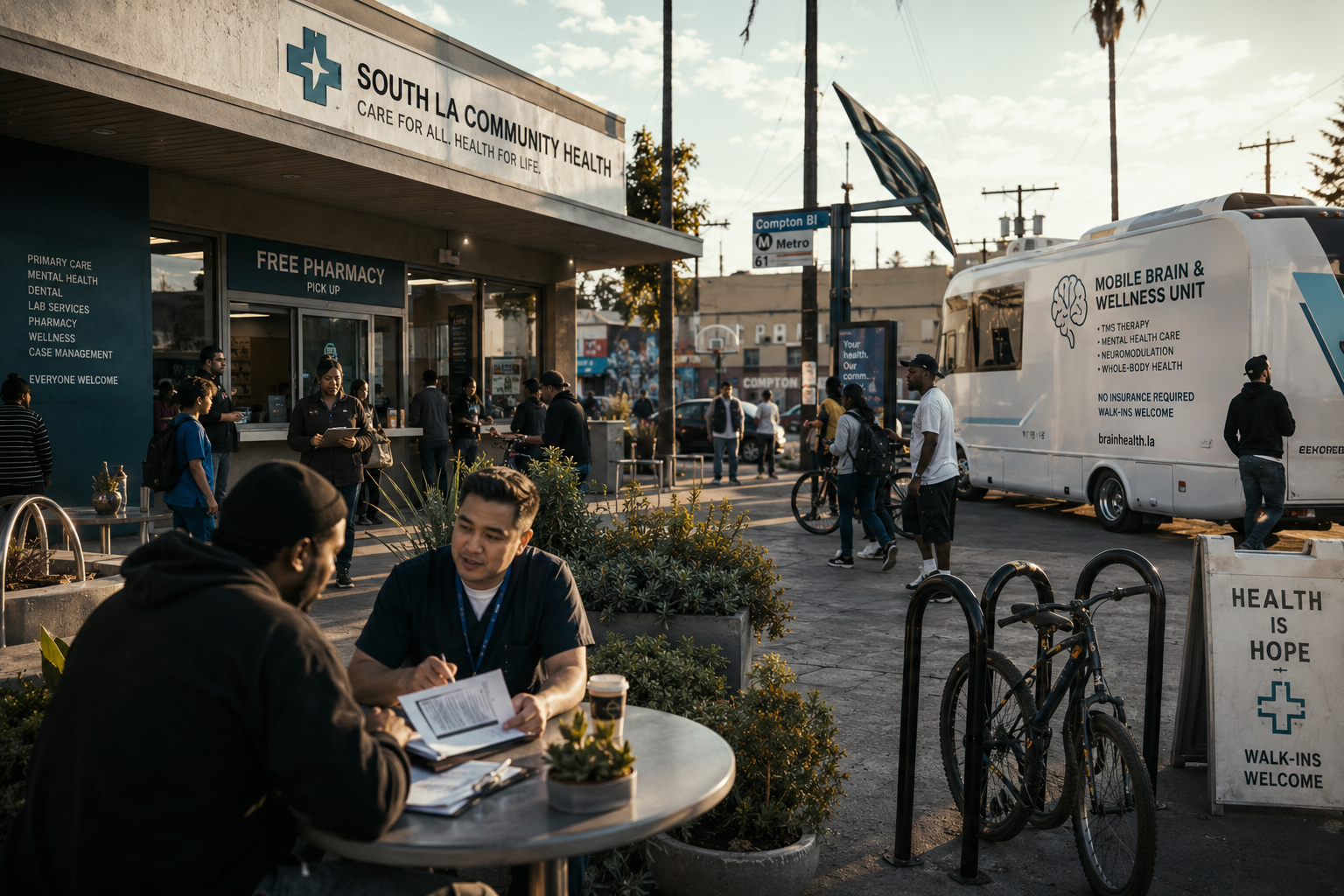
A significant portion of what we describe as personal failure, chronic dependency, or unrealized potential may instead be the visible expression of prolonged biological, psychological, and environmental compression. Drawing from neuroscience, public health, developmental research, and economic reality, this piece examines the distinction between who a person is and what present circumstances make accessible. It argues that the person we encounter is often not the full measure of their capacity, but the version currently permitted by the conditions surrounding them.

AccessCapacityPublic health
Read the essay
05

The Bottom-Up Athlete

Neuromodulation for Human Maturity, Expressed Through Sport

The same nervous system that learns to perform under pressure can also learn to live with more clarity, flexibility, and presence. This essay begins with what is known about noninvasive neuromodulation and follows it into a developmental claim: that athletic performance is one expression of substrate health rather than its source, and that maturation at the biological level is worth pursuing for its own sake.

NeuromodulationPerformanceDevelopment
Read the essay
06

Upstream Society

On Raising Human Beings Who Can Hold What Life Delivers

This essay traces what we have been calling resilience from its origins in childhood development through its expression in adult life and its cost at civilizational scale, arriving at the conclusion that the version of a society we are capable of building is in almost direct proportion to the quality of attention we are willing to bring to what we are actually raising. That question begins with the adult, and specifically with the adult's own unfinished business with themselves.

DevelopmentResilienceSociety
Read the essay
07

On the Rock

A Script for the Quiet Unraveling of a Man Who Was Fine

Modern life is often praised for its efficiency, its comfort, and its ability to keep a man technically functional while quietly dissolving the conditions that made him feel alive. On the Rock traces that dissolution with dark humor and a straight face, following a mid-thirties everyman whose polished routine and perfectly respectable life slowly reveal themselves as a beautifully organized form of disconnection.

NarrativeDisconnectionModern life
Read the essay
08

The Architecture of Becoming

A Design Spec for the Metacognitive Human

Modernity is defined by a developmental discontinuity between the high-velocity systems we have built and the internal architecture through which we navigate them. This piece shifts attention from symbolic survival to the engineering of the Observer. It argues that the next threshold is neither a more capable artificial intelligence nor a more efficient economy, but the widespread cultivation of metacognitive flexibility: the capacity to update mental models in real time without collapsing into defensive certainty.

MetacognitionDesignModernity
Read the essay
09

God as Vulnerability, Compression, and Social Technology

God, not as origin, but as one of consciousness's most durable constructions

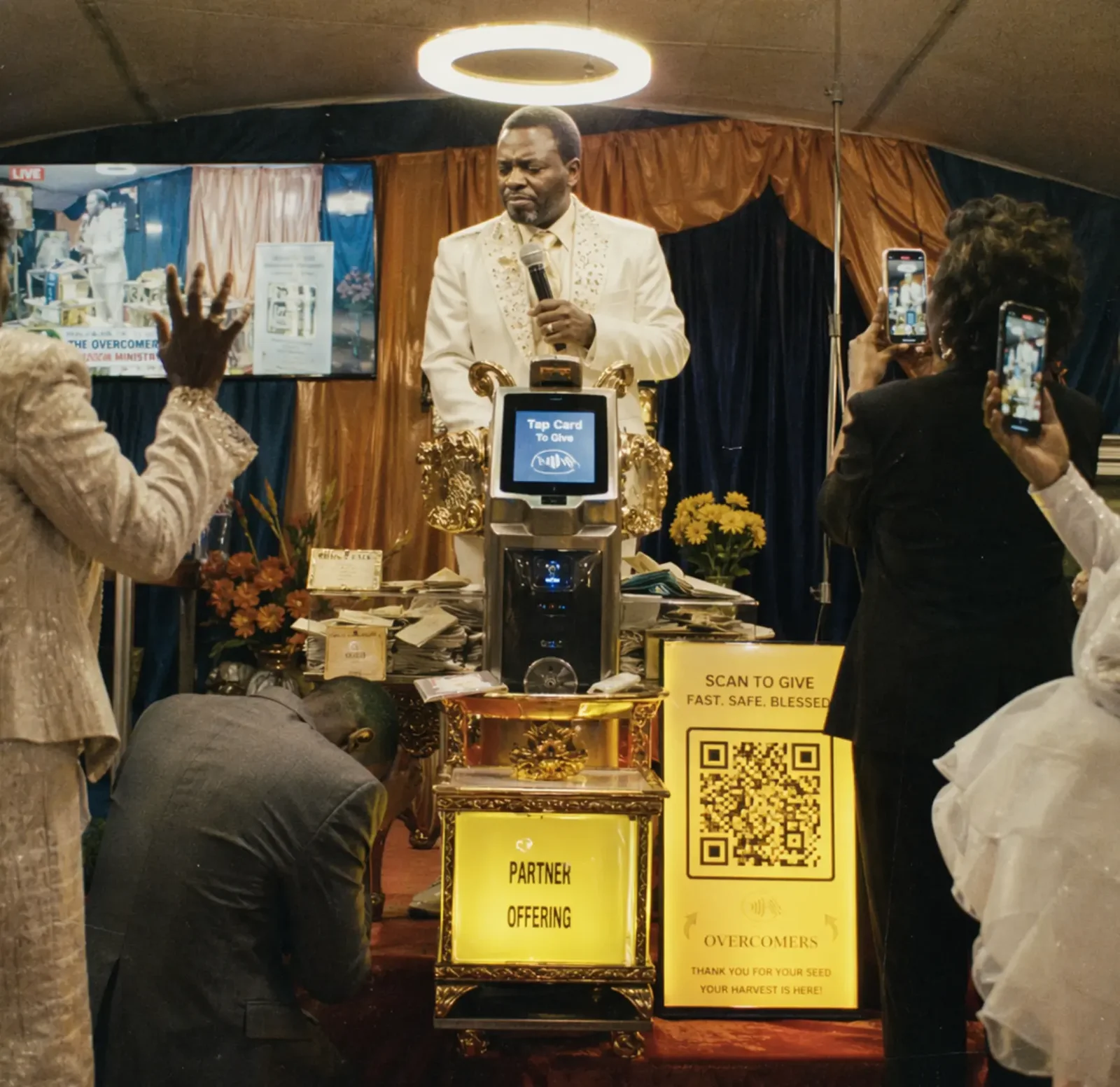
This essay follows a colder sequence: gradient into sensation, sensation into valuation, valuation into coordination, coordination into modeling, and modeling into a self now burdened by time, attachment, and the foreknowledge of loss. Religion appears there as a way of rendering uncertainty more governable, suffering more legible, and social order more durable than bare life typically allows.

MeaningCoordinationUncertainty
Read the essay
10

I Thought That I Was Self-Aware

Turns out, I was just well-narrated

I had a language for every edge in me, and enough tenderness in that language to make it feel like truth. By then, the world was full of soft, intelligent ways to narrate a life before ever having to meet it. That was the comfort of it, and the danger. I could explain myself beautifully, right up until explanation stopped softening consequence.

NarrativeSelf-knowledge
Read the essay
11

The ADHD-Immortality Paradox

The state isn't stuck. It just can't feel its own future.

Global inaction on existential threats may stem from a macro-ADHD condition, in which institutions mimic temporal myopia and prioritize symbolic, permanent identity over adapting to future realities. The framework suggests that societal repression of finitude drives high-energy defense of the status quo, and proposes finitude literacy as a way to lower the collective cognitive load of death negation.

Temporal myopiaInstitutionsFinitude
Read the essay
12

The Honest Differential

The universe began because nothing simply could not rest

A theory of existence as a structural consequence of the impossibility of absolute nothingness, producing a gradient cosmology in which consciousness navigates the friction between primal simplicity and emergent complexity. The essay proposes gradient metabolism, the transformation of high-pressure reality into elaboration and growth, as the axis upon which a system either metabolizes the tension of existence or collapses into dissociative entropy.

CosmologyGradientDissociation
Read the essay