Abstract
This essay follows a colder sequence: gradient into sensation, sensation into valuation, valuation into coordination, coordination into modeling, and modeling into a self now burdened by time, attachment, and the foreknowledge of loss. Religion appears there as a way of rendering uncertainty more governable, suffering more legible, and social order more durable than bare life typically allows.
Section outline
These ideas are offered as reflections, theories, and interpretive arguments, not as final proof, settled metaphysics, or an exhaustive account of reality. This piece does not claim to have disproven God in any absolute sense. It is concerned with how human beings may have come to imagine, construct, inherit, and preserve god-concepts across time, and with the psychological, social, and civilizational work those concepts have done. It is not written as an attack on belief, nor as a dismissal of the sincerity, depth, or emotional reality of religious life. It is an attempt to give language to certain patterns in human development, meaning-making, mortality, and collective order. If any part of it feels unsettling, that may be because questions of God tend to reach into the oldest layers of attachment, fear, hope, and identity all at once. The aim here is not to mock that weight, but to look at it plainly.
Series Note
This essay belongs to the same sequence as The Persistence Constraint [Part I] and The ADHD-Immortality Paradox [Part II]. The first of those pieces asked how organized forms remain themselves under pressure and argued that persistence is never a matter of perfection. It is a matter of governing variation well enough to keep the form from tearing open. The second piece moved that same problem inward and asked what becomes of a self that can feel time, can sense its own instability, can foresee loss, and still has to go on functioning. Its answer was that a good deal of individual and institutional life becomes tied to the management of finitude. Law, economics, identity, and religion all become involved in that work.
The present essay carries the line one step farther. It asks what happens when a species has already become capable of sensation, valuation, prediction, attachment, grief, self-reference, and foreknowledge of death, and then begins building symbolic structures large enough to hold those pressures in common. Its claim is that God, across much of human history, belongs to that later labor. God is not the beginning of consciousness, and not the first source of moral order. God is one of the most enduring constructions generated when vulnerable, death-aware organisms seek forms that can render uncertainty more livable, social life more governable, and loss less final than it otherwise appears.
Abstract
This paper argues that God is better understood as one of consciousness's later constructions than as consciousness's source. The argument begins lower than theology usually prefers to begin. It begins with gradient, with difference in the world, and with living systems becoming sensitive to that difference because persistence required it. From there, sensation develops as openness to what varies. Valuation develops as the sorting of what helps from what harms. Coordination develops as the effort to gather action under pressure. Modeling develops as the brain's growing capacity to anticipate rather than only react. Selfhood develops when the organism begins carrying a working account of its own continuity across time. Consciousness, in this frame, is a later integration of these earlier developments.
Religion enters after that architecture is already alive. It takes shape when minds formed by sensation, valuation, coordination, prediction, selfhood, attachment, grief, and mortality begin trying to make uncertainty more bearable, conduct more stable, and loss less absolute than bare life often allows. God, then, does not descend into an empty species. God appears within a species already burdened by opacity, longing, memory, and death-awareness. In that setting, religion becomes more than assent to doctrine. It becomes a way of compressing uncertainty, absorbing grief, extending moral authority, and preserving existential solutions across generations.
Keywords: systemic finitude literacy; consciousness; religion; mortality; cognitive science of religion; social coordination; institutional memory
Beginning lower
Most writing about God starts too far downstream. It begins with doctrine, revelation, or declared belief, which is to say it begins after a great deal of prior work has already been done by the body, by the nervous system, by memory, by social dependence, and by time. By the time a person is able to ask whether God is real, the deeper architecture from which that question arises has long since taken shape. The organism has already learned to register difference. It has already learned to sort what threatens from what sustains. It has already learned to coordinate action, to run ahead of events, to carry itself forward through memory, and to feel the strain of its own continuity. Mortality has already entered the room.
That older sequence matters because it changes the tone of the entire inquiry. God no longer appears as the primitive foundation of mind. God appears farther along, after a mind capable of attachment, grief, anticipation, and self-reference has already been built and has begun looking for forms large enough to hold what it now knows. This does not diminish religion. It locates it. The question becomes not how consciousness woke up inside a divinely prepared order, but how organisms already shaped by difference, feeling, prediction, and finitude came to construct symbolic worlds in which uncertainty could be carried and social life could be kept from flying apart.
Gradient, sensation, and the body's first education
The beginning is plain. A gradient is a difference with consequence attached to it. It may be a change in temperature, a shift in pressure, the presence or absence of light, the smell of something burning, the sound of movement where there should have been quiet. Life does not begin by understanding such differences. It begins by being reached by them. A living system survives by remaining sensitive to what varies around it. That sensitivity is where sensation begins.
The point is easier to feel than to theorize. A room changes before anyone has said why, and the body notices. A silence lands wrong. A face hardens by a degree. A message arrives late, and before the screen is even opened, the body has already shifted toward it. These are not special moments. They are ordinary evidence that the organism is reached by difference before it explains the difference to itself. Sensation, in that sense, is not yet thought and not yet doctrine. It is contact. The world gets in.
That contact has to precede everything that comes later. If the organism were not first reachable, it could not later become reflective. If it could not later become reflective, it could not become self-aware. And if it could not become self-aware, it could not become haunted by time, by memory, or by death. The first education is bodily. The world enters before it is interpreted.
Feeling as the marking of significance
Once the world can enter the organism, another problem comes into view. Not everything that arrives can be treated alike. Some signals matter a great deal, some very little. Some nourish, some threaten, some can wait, and some carry a cost for every second of delay. Valuation emerges from that pressure. The organism begins sorting what matters.
This is where feeling belongs. Emotion is often discussed as though it were a decorative excess attached to reason, but the stronger view is that feeling marks significance before explicit reasoning catches up. Fear, relief, grief, shame, tenderness, desire, and calm are not late rhetorical ornaments. They are among the body's earliest ways of assigning weight. A person does not first build a finished verbal account and then feel accordingly. More often the sequence runs the other way. The body registers importance before the mind has finished drafting its explanation. Neuroscience and cognitive work align with that order: affect marks relevance early, explicit narration later.
That is why these states do not first arrive as theory. Bad news reaches the gut before the facts are fully assembled. Trust often becomes visible first in the body's easing, in the breath or the shoulders, before a person is ready to say aloud that trust is present. Grief can remain in the throat and chest long before it becomes visible. Love, too, often begins as orientation, warmth, and ease before the intellect has produced a settled account of what has happened. Feeling is not a side note to cognition. It is one of the conditions that make cognition necessary. A creature able to be reached, weighted, moved, and wounded in this way is already carrying the makings of a much larger interior life.
Coordination, prediction, selfhood
Sensation and valuation still leave the organism with a practical problem. It must gather itself well enough to act. Attention has to be allocated. Energy has to be spent in some directions rather than others. Competing demands have to be managed quickly enough that the body can behave as one thing rather than as a riot of impulses. Coordination answers that problem.
Repeated coordination under pressure favors another development. An organism that must repeatedly gather itself in the face of what is coming gains by learning to run ahead of events rather than merely absorb them. This is where modeling becomes decisive. The brain is not best understood as a storage cabinet. It is a forecasting organ. It tracks regularities, prepares for likely outcomes, updates itself when those outcomes fail to arrive, and in so doing allows the organism to anticipate rather than only react. Predictive accounts of mind sit squarely with this picture.
The next turn is stranger and more consequential. Some of that modeling power bends back upon the organism itself. The system no longer only registers the world. It begins carrying an account of its own continuity, position, vulnerability, and probable future. Selfhood emerges there, not as hidden substance but as recursive modeling thickened by memory and social consequence. Consciousness follows later as the inward integration of sensation, valuation, coordination, modeling, and self-reference. It is not the seed. It is a late flowering.
Once that is said plainly, several old confusions begin to loosen. Thought no longer looks like something severed from the body. It looks like the later refinement of a predictive task that was already underway. Selfhood no longer looks like a jewel hidden somewhere behind the ribs. It looks like a durable, useful, and costly achievement. Consciousness, then, is not the first miracle. It is one of the last arrivals in a long sequence of increasingly elaborate responses to gradient.
Time, mortality, and the enlargement of strain
Once selfhood extends across time, mortality changes species. Death is no longer a mere event at the end of life. It becomes an ongoing pressure inside life itself. A creature that can imagine tomorrow can also imagine the day after it is gone. That is not a small development. It widens the strain under which meaning, attachment, and behavior must now be managed.
This is the hinge on which the second journal movement turned, and it remains central here. A self that can foresee loss does not only suffer loss when it arrives. It begins negotiating with finitude in advance. It invests in continuity projects. It seeks forms that can soften finality, preserve dignity, and give its life a placement larger than its own eventual disappearance. Terror management work supports this broad claim. Mortality awareness reliably pushes organisms toward symbolic continuities that buffer anxiety and stabilize conduct. Religion becomes especially potent in this regard because it can offer witness, order, continuity, and moral legibility all at once.
What matters for the present essay is that religion does not become plausible at this point by accident. It becomes plausible because the mind carrying death-awareness is already built for significance, memory, projection, attachment, and social dependence. A creature that can feel time and imagine extinction is going to pay dearly for structures that make the burden of such knowledge easier to bear.
Religion as stabilization
Religion, in this frame, is not first encountered as polished doctrine. It is encountered as atmosphere, as structure, as inherited tone, as ritual, as the felt weight of witness, as the strange endurance of forms that seem to know how to hold grief, guilt, obligation, hope, and moral tension better than an isolated individual can hold them alone. This is why the sacred is better understood first as stabilization than as proposition. A socially tuned organism, burdened by uncertainty and unable to tolerate opacity indefinitely, extends the architecture of mind into the unknown and begins living inside the world that extension produces.
That is not all religion is, but it is part of why religion is so adhesive. It does not only answer abstract questions. It gathers vulnerability into repeatable forms. It turns grief into ritual sequence, guilt into moral language, loss into continuity, and social order into something more durable than negotiation alone. Research on religion as adaptive system, ritual, and institution supports that broader picture. Religion stabilizes vulnerability through narrative, ritual, and archive.
To say this is not to call religion flimsy or trivial. Construction can bear tremendous weight. The point is not to sneer at what has been built. The point is to notice what kind of pressure called it forth.
God as compression, witness, and social technology
By the time God appears in a recognizably theological form, the organism beneath the concept is already carrying a great deal. It can detect agency. It can project intention. It can remember the dead. It can anticipate punishment. It can long for witness. It can live inside social worlds where fairness, betrayal, obligation, and shame matter deeply. God appears there, inside minds already shaped by all of that.
For that reason God can be understood along three connected lines. First, God functions as a compression device for opacity. When the world feels too contingent, too painful, or too difficult to bear as process alone, agency becomes an available solution. Intention is easier to live with than blankness. Second, God functions as witness and shield in the face of mortality. A death-aware species values continuities strong enough to soften finality. Third, God functions as social technology. Shared invisible authority can regulate conduct, compress moral renegotiation, and stabilize order across scales too large for face-to-face kinship alone. None of these functions exhaust religion, but together they help explain why god-concepts have been historically durable.
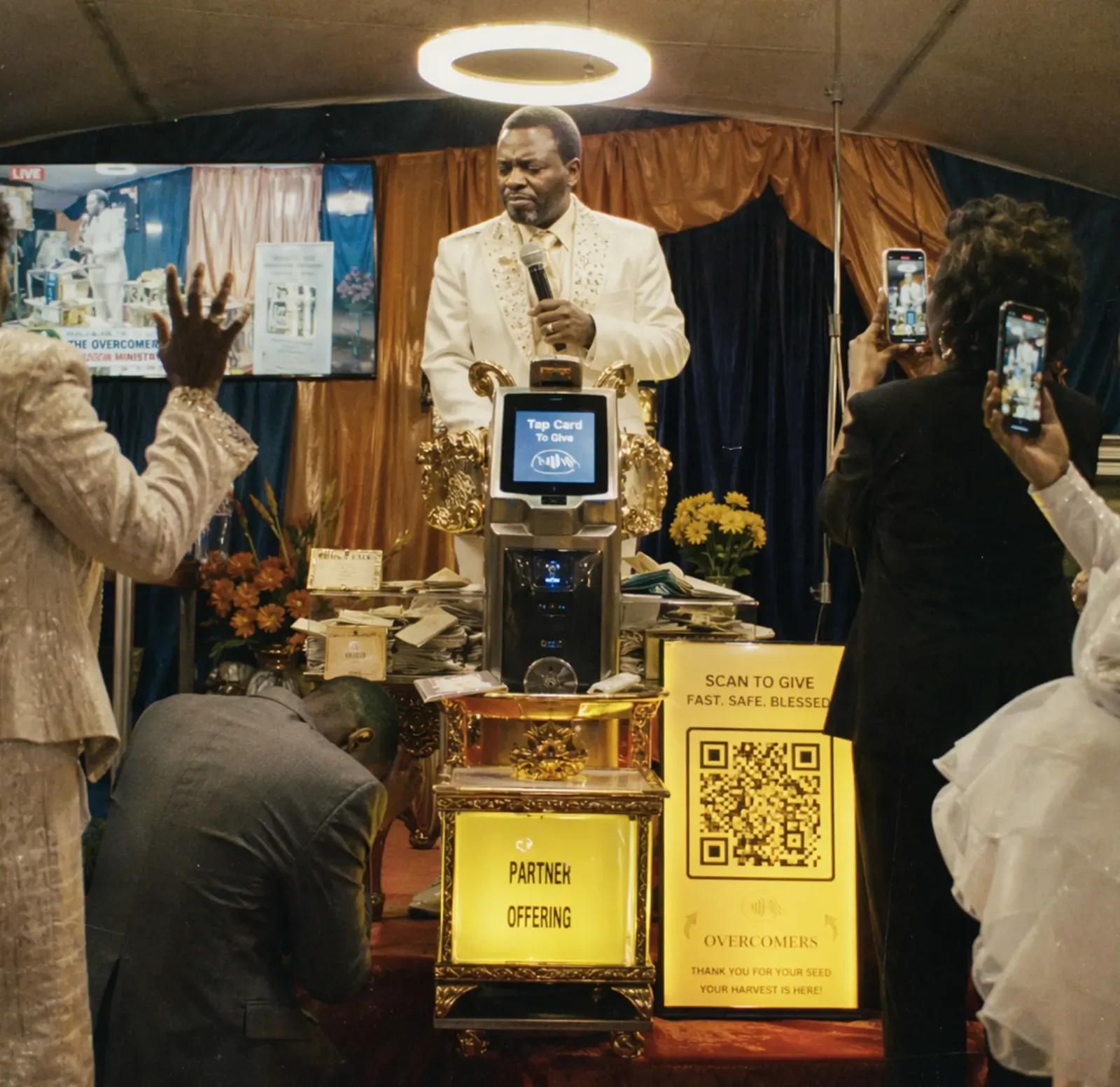
The historical sequence inside religion itself often follows a recognizable path. The world is first haunted: ancestors, presences, residues, dreams, diffuse agencies. Later it is governed: moralizing powers, punitive surveillance, divine witness extending beyond the local room. Later still it is archived: canon, doctrine, hierarchy, portability, inheritance, enforcement. What began as an answer to pressure hardens into institution.
Archive and the strange endurance of the sacred
Once writing, canon, and durable institutions enter the story, religion acquires another kind of body. The sacred becomes portable. Interpretation becomes jurisdiction. Memory becomes infrastructure. At that point religion is not only atmosphere or inherited rhythm. It is archive. It is a way of preserving behavioral blueprints, symbolic continuity, and moral authority across generations. This is one reason religion can operate as behavioral compression. It reduces the number of negotiations a society must reopen in real time and attaches conduct to a frame that does not have to be reinvented every generation.
Over time, structures built in response to vulnerability can come to feel primordial from the inside. What was assembled across generations begins to look like ground. The finished cathedral is mistaken for the mountain. That inversion is not a side issue. It is part of religion's endurance. Constructed solutions, once emotionally real, ritually reinforced, and institutionally hardened, can be experienced as though they had always been there.
Conclusion
The argument of this paper begins lower than theology usually begins. It begins with gradient, with difference in the world and the necessity of remaining sensitive to that difference. From there it follows the sequence through sensation, valuation, coordination, modeling, selfhood, and consciousness. Once those developments are in place, and once the organism has become capable of attachment, grief, memory, moral tension, and death-awareness, religion becomes one of the larger structures through which that burden is carried. God belongs there. Not at the beginning of the chain, but farther down, where a death-aware, socially dependent mind begins constructing forms that can hold uncertainty, regulate conduct, and soften loss.
This does not settle the metaphysical question. It does not prove that nothing lies beyond the god-concepts human beings have made. It does something narrower and more defensible. It clarifies the human question. God, in this frame, is one of consciousness's grand constructions: a projection of agency into opacity, an answer to mortality pressure, a stabilizing authority for vulnerable collectives, and a durable civilizational form built around fragility that could not remain bare for long.
Within the larger journal arc, the line now stands clear. The Persistence Constraint asked how organized forms remain themselves under pressure. The ADHD-Immortality Paradox asked what becomes of a self that must carry the knowledge of its own ending. The present essay follows those same pressures outward until they harden into deity, doctrine, and archive. What began as a question of persistence becomes, at the human scale, a question of what kind of structures vulnerable minds raise once they can feel time, foresee death, and still need to go on.
References
Alcorta, C. and Sosis, R. (2005) 'Ritual, emotion, and sacred symbols', Human Nature, 16, pp. 323-359.
Atran, S. and Henrich, J. (2010) 'The evolution of religion: How cognitive by-products, adaptive learning heuristics, ritual displays, and group competition generate deep commitments to prosocial religions', Biological Theory, 5, pp. 18-30.
Atran, S. and Norenzayan, A. (2004) 'Religion's evolutionary landscape: Counterintuition, commitment, compassion, communion', Behavioral and Brain Sciences, 27, pp. 713-730.
Barrett, J.L. and Lanman, J.A. (2008) 'The science of religious beliefs', Religion, 38, pp. 109-124.
Bechara, A. (2004) 'The role of emotion in decision-making: Evidence from neurological patients with orbitofrontal damage', Brain and Cognition, 55, pp. 30-40.
Boyer, P. (2003) 'Religious thought and behaviour as by-products of brain function', Trends in Cognitive Sciences, 7, pp. 119-124.
Boyer, P. and Bergstrom, B. (2008) 'Evolutionary perspectives on religion', Annual Review of Anthropology, 37, pp. 111-130.
Burke, B.L., Martens, A. and Faucher, E.H. (2010) 'Two decades of terror management theory: A meta-analysis of mortality salience research', Personality and Social Psychology Review, 14, pp. 155-195.
Fitouchi, L., Singh, M., André, J. and Baumard, N. (2025) 'Prosocial religions as folk-technologies of mutual policing', Psychological Review.
Jonas, E. and Fischer, P. (2006) 'Terror management and religion: Evidence that intrinsic religiousness mitigates worldview defense following mortality salience', Journal of Personality and Social Psychology, 91(3), pp. 553-567.
Peoples, H.C., Duda, P. and Marlowe, F.W. (2016) 'Hunter-gatherers and the origins of religion', Human Nature, 27, pp. 261-282.
Purzycki, B. and Sosis, R. (2022) Religion Evolving: Cultural, Cognitive, and Ecological Dynamics.
Vail, K., Rothschild, Z., Weise, D., Solomon, S., Pyszczynski, T. and Greenberg, J. (2010) 'A terror management analysis of the psychological functions of religion', Personality and Social Psychology Review, 14, pp. 84-94.
Wood, C. and Shaver, J. (2018) 'Religion, evolution, and the basis of institutions: The institutional cognition model of religion', Evolutionary Studies in Imaginative Culture, 2, pp. 1-20.
Medical Disclaimer: This information is for general educational purposes only and does not provide medical advice, diagnosis, or treatment. Always seek the advice of a physician or other qualified health provider with any questions you may have regarding a medical condition.